
Practice Guide
How to Choose an EMR for Acupuncture and TCM Clinics
Choosing an EMR is one of the highest-leverage decisions an acupuncture or TCM clinic makes. Beyond price, evaluate whether the system truly fits charting, follow-up planning, team collaboration, privacy compliance, patient experience, and future growth—not just a generic medical software marketing page.
Table of Contents
Why EMR selection shapes long-term clinic quality
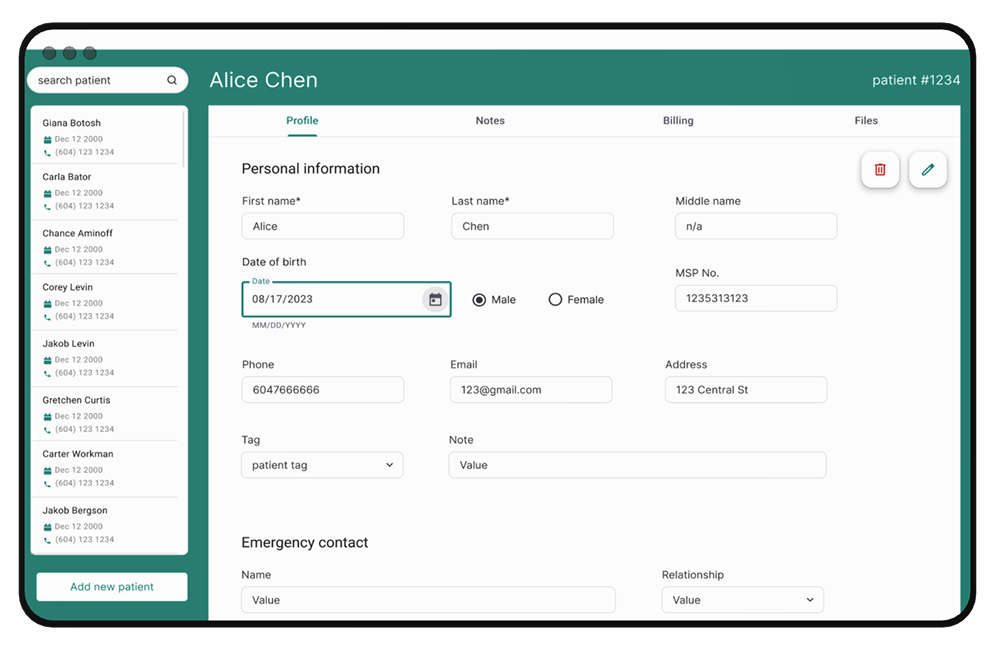
An EMR is not just a place to store patient files. It shapes how practitioners write SOAP notes, how the front desk handles appointments, how teams hand off care, how the clinic responds to insurance or referral requests, and whether patients experience the practice as organized and professional. If the system does not fit acupuncture and TCM workflows, teams quickly fall back to paper, screenshots, sticky notes, and extra spreadsheets.
Before comparing vendors, define clinical and operational goals: less after-hours charting, better visit-to-visit continuity, consistent multi-practitioner notes, privacy compliance, clearer patient communication, or readiness for multi-location growth. Clear goals keep demos from becoming feature laundry lists.
Core evaluation criteria for acupuncture and TCM clinics
Clinical fit
Does the system support SOAP structure, tongue and pulse findings, acupuncture points, pattern differentiation, treatment plans, follow-up tracking, and home-care instructions? If core clinical content only fits in one giant notes field, readability, reporting, and team handoffs suffer over time.
Documentation efficiency and AI assistance
AI SOAP drafts, templates, common phrases, and structured fields can cut repetitive typing. Confirm that AI is drafting support only—practitioners must still edit, review, and sign the final note.
Operations workflow
Scheduling, patient profiles, follow-up reminders, chart export, post-visit email, and role permissions should reduce duplicate entry rather than force staff to bounce between tools.
Privacy, compliance, and security
Review HIPAA, PIPEDA, and GDPR-related controls, access permissions, encryption, audit habits, backups, and export capability. Also define processes for PDF downloads, sharing records, and removing access when staff leave.
Portability and future growth
Confirm data export, multi-practitioner support, multi-location readiness, different service types, and room for future features. An EMR is long-term infrastructure—not just a one-practitioner minimum today.
Questions to ask in a trial or demo
- Can you walk a complete flow: new patient intake, initial SOAP, follow-up note, treatment plan, and export?
- Are tongue, pulse, points, pattern differentiation, and treatment response captured in structured ways?
- How are AI drafts generated, how is data handled, and how do practitioners review and revise them?
- Can multi-practitioner clinics set role permissions and patient access scopes?
- For referrals or insurance requests, can records be exported by date and practitioner?
- If we leave later, can we export patient demographics and charts—and in what formats?
- What do support, training, migration, and go-live take in time and cost?
Look past monthly fees: total cost of ownership
A cheaper system that adds 30 minutes of charting per day can cost more than a higher subscription. Include subscription fees, migration, training time, template setup, staff ramp-up, support responsiveness, data export, and the cost of adding practitioners or locations later.
Opportunity cost matters too: incomplete notes weaken follow-up quality, hard-to-find charts hurt patient experience, and weak exports slow insurance or referral work. EMR ROI usually comes from less charting time, fewer communication errors, stronger visit continuity, and room to grow.
A 30–90 day rollout plan
Days 1–30: foundations—patient profiles, scheduling, core SOAP templates, and permissions. Days 31–60: quality—follow-up templates, AI draft review habits, export workflows, and front-desk training. Days 61–90: review metrics—note completion time, missing fields, return-visit rate, export turnaround, and team feedback.
Do not define success as “use every feature.” Aim for “the 3–4 most important workflows run stably,” then add automated follow-up, analytics, or multi-location management.
Related reading: How modern EMR systems transform acupuncture practices.
Key takeaways
- Define clinic goals before comparing EMR features so generic marketing claims do not steer the decision.
- Acupuncture and TCM systems should support SOAP, tongue/pulse, points, pattern differentiation, follow-ups, and treatment plans.
- Total cost of ownership includes charting time, training, migration, support, and expansion—not only the monthly fee.
- Roll out in phases and judge adoption quality with 30–90 day metrics.
Frequently asked questions
Can an acupuncture clinic use a general medical EMR?
Yes, but confirm it fits TCM and acupuncture workflows. If tongue, pulse, points, pattern differentiation, and follow-up plans only live in free text, long-term efficiency and readability usually suffer.
Is AI SOAP a must-have feature?
Not the only criterion, but valuable for clinics that want less charting burden. AI drafts must remain editable and reviewable, with the practitioner confirming the final note.
What do clinics most often overlook when choosing?
Migration, training, permissions, export, and real follow-up workflows. Ask vendors to demonstrate a complete real visit, not only a dashboard tour.
How long does it take to know if an EMR is a fit?
Usually 30–90 days: whether notes finish on time, duplicate work drops, charts are easier to find, and follow-up plans are clearer.
Evaluate an EMR built for acupuncture and TCM
Aura Cure serves acupuncture, TCM, and RMT clinics with AI SOAP notes, scheduling, patient management, export, and privacy-compliance support—so teams can build sustainable workflows.
Start Free TrialRelated articles
Practice Guide
How to write great SOAP notes for acupuncture clinics
A strong acupuncture SOAP note clearly records chief complaint, objective findings, clinical assessment, and an actionable treatment plan.
Product Update
Improving patient care with digital records
Digital records make history, treatment plans, and visit-to-visit changes easier to track—improving care quality.